
Vietnam Travel Guide: Proven 3-Week Route on $30 a Day
Need a Vietnam travel guide that answers the big questions fast? Here is the short version: most travelers need an e-visa or a nationality-based exemption, a realistic backpacker day costs roughly $30 to $50, and the smartest route runs north to south with overnight transport doing double duty as your bed.
We built this Vietnam travel guide for independent travelers who count cost per day and hours per stop. When you finish reading, browse the Travel Tricks itineraries vault and match a ready-made route to your dates. All prices below are approximate ranges drawn from published fare and cost data, so confirm current numbers before you book anything.

What You Will Learn
Vietnam Travel Guide Step One: Visa and Entry Rules
Visa policy is the first thing to lock down, and it depends on your passport. Vietnam allows visa-free stays to citizens of selected countries, with limits that range from about 14 to 90 days by nationality. Everyone else needs a visa before arrival. Check your own passport on the official government site before you buy flights.
For most backpackers, the Vietnam e-visa is the easy path. According to the official Vietnam immigration e-visa portal, an e-visa is valid for up to 90 days with single or multiple entry, and the fee is paid online and not refunded if your application is refused. Published embassy guidance lists roughly $25 for single entry and $50 for multiple entry. Processing is officially three working days, but delays happen, so apply at least two weeks ahead.
Three Vietnam e-visa details that trip people up
First, you must enter through the border gate you selected on the application, and you cannot change it after approval. Second, double check that your name and passport number match your passport exactly, because typos cause problems at immigration. Third, use only the government portal, since lookalike websites charge extra fees for the same document. Carry a passport with several months of validity left, as most guidance suggests at least six.
Best Time to Visit Vietnam Region by Region
Vietnam is long and narrow, so three different weather patterns run at once. The best time to visit Vietnam depends on which region matters most to you, and no single month is perfect everywhere.
The north, including Hanoi and Sapa, is usually most pleasant in spring and autumn, when days are mild and fairly dry. Winter can be cold and grey, and summer is hot and wet. The central coast, home to Hue, Da Nang and Hoi An, tends to be driest in spring and early summer, while autumn brings heavy rain and typhoon risk. The south, around Ho Chi Minh City and the Mekong Delta, has a dry season from roughly winter to early spring and a rainy season through the middle of the year.
Our advice: if you have one window, spring is the safest bet for a full north to south trip. Whatever the best time to visit Vietnam looks like for your dates, check the Lunar New Year calendar, because transport sells out and many small businesses close for days. This Vietnam travel guide route works in most months, but you will want to flex the order of regions.
Vietnam Backpacking Budget: What a Day Really Costs
A realistic Vietnam backpacking budget sits around $30 to $50 per day when you sleep in dorms, eat street food and move by sleeper bus. Cost reports vary by traveler, and Hanoi, Ho Chi Minh City, Da Nang and Hoi An run higher than smaller towns.
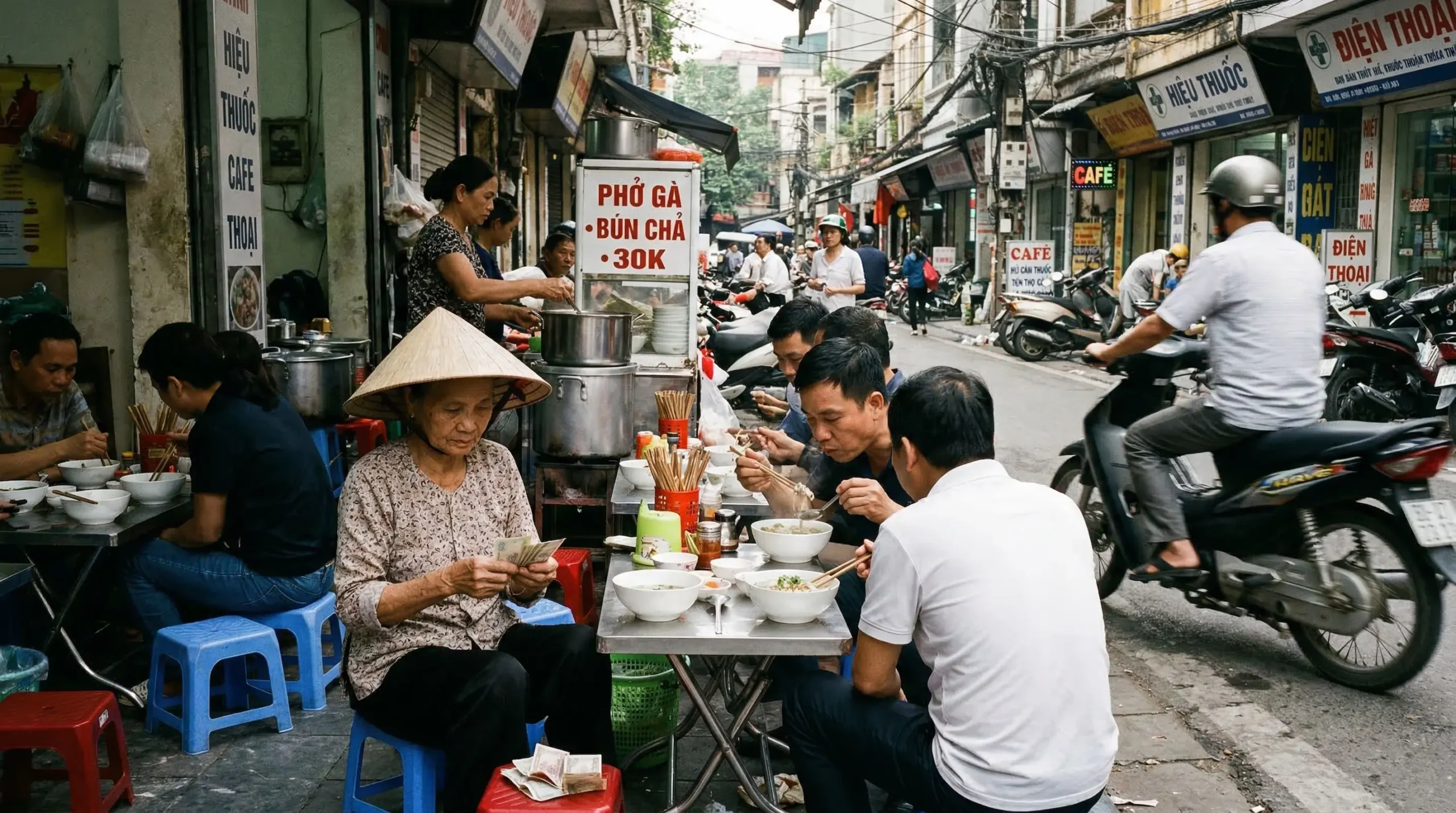
Here is how the money usually splits. Dorm beds cost a few dollars in quieter towns, while a private budget room in a big city often lands between $12 and $20. Street food meals commonly cost $1 to $3, and a bowl of pho is around $2. Museum and heritage site entry is typically $1 to $5, and a daily scooter rental in Hoi An is roughly $6.
Four items inflate any Vietnam backpacking budget: a Ha Long Bay cruise, a Sapa tour, domestic flights and tailored clothes in Hoi An. Budget boats for one night exist at roughly $55 to $80, while standard packages cost far more, so decide what you truly want before you arrive. Our guide on how to travel on a budget explains how to set daily spending caps that survive contact with the road.
Travel Trick: Let the Night Ride Pay Your Rent
An overnight sleeper bus or train replaces a night of accommodation and gets the long distance out of your daylight hours. Book overnight transport for your two longest legs, such as Hanoi to Hue, and save daytime for sightseeing. Always confirm your seat or berth and the pickup point the day before departure.
Getting Around: Vietnam Sleeper Bus, Train and Flights
Use this table to compare the main transport options in this Vietnam travel guide before you build your route. Costs are typical ranges, not fixed fares.
| Mode | Typical Cost | Best For | Watch Out For |
|---|---|---|---|
| Sleeper bus | About $15 to $25 on long overnight hops | Saving a hotel night on routes like Hanoi to Sapa | Quality varies by operator |
| Soft sleeper train | About $25 to $45 for routes like Hanoi to Hue | Scenic coastal legs and more space | Slow, the full Hanoi to Ho Chi Minh City ride takes around 35 hours |
| Domestic flight | From roughly $30 on popular routes | Skipping long distances when time is short | Baggage fees on budget carriers |
| City ride-hailing | Fare shown in the app | Airport and city transfers | Use the in-app price and skip the haggling |
The Vietnam sleeper bus is the backbone of budget travel. Operators compete on price, and the better ones offer reclining berths that make an overnight ride bearable. A VIP sleeper bus costs a little extra and is worth it on the longest hauls. Choose a well-reviewed company, keep valuables in your daypack, and remember that legroom can be tight for tall travelers.
Trains suit travelers who want scenery and space. The main line runs between Hanoi and Ho Chi Minh City with stops at Hue, Da Nang and Nha Trang, and it rewards you with coastal views around Da Nang and Hue. Flights are surprisingly cheap on popular routes, so learn how to find cheap flights and book early for the best fares.
Vietnam Travel Guide Route: North to South in Two to Three Weeks
Most backpackers travel north to south. They fly into Hanoi, work down through Hue, Hoi An and Da Nang, then finish in Ho Chi Minh City or continue into Cambodia. A two week version looks like this: Hanoi for 3 nights, an overnight Ha Long Bay trip for 2 nights, Hue or Hoi An for 3 nights, Ho Chi Minh City for 2 nights and one night in the Mekong Delta. With a third week, add Sapa, a Da Nang beach day and Phu Quoc. If you arrive from Cambodia, the reverse route works well too.
7 Proven Tips Before You Book
- Check visa rules for your passport on the official portal before buying flights.
- Fly into Hanoi and out of Ho Chi Minh City, or the reverse, to avoid backtracking.
- Use overnight transport on your two longest legs to save a night of accommodation.
- Keep one flexible day per region for weather changes and delays.
- Install a ride-hailing app such as Grab so you never argue over a taxi fare.
- Carry small notes for street food and markets, since coins are rarely accepted.
- Compare quotes for Ha Long Bay and Sapa tours instead of buying the first offer.

Vietnam Travel Guide FAQ
Two weeks covers the classic north to south highlights at a steady pace. Three weeks lets you add Sapa, Da Nang beach time and Phu Quoc without rushing.
A realistic Vietnam backpacking budget is about $30 to $50 per day, plus flights, your visa and any big tours. Costs vary by city and travel style, so treat this as a starting range.
It depends on your passport. Citizens of selected countries can enter visa-free for a limited period, and everyone else needs a visa. The Vietnam e-visa is available online and is valid for up to 90 days. Confirm your situation on the official portal.
Spring is a safe bet for a full north to south route, since it is usually mild in the north and drier along the central coast. Check each region’s weather before locking in fixed bookings.
Reputable operators run comfortable overnight services, and many travelers use them to save on accommodation. Choose a well-reviewed company, keep valuables with you and book a VIP berth on very long routes.
Common Traveler Mistakes in Vietnam
A good Vietnam travel guide should also tell you what to skip. These are the pitfalls most often reported by independent travelers.
Vietnam is about 1,700 km long by train. Cutting one region gives you two more relaxed days everywhere else.
Third-party sites often add service fees to the same document. Apply through the government portal only.
Rain and typhoon risk on the central coast can wreck fixed plans. Leave buffer days in that region.
Ha Long Bay and Sapa prices swing widely. Compare at least three quotes and read what is included.
Master Route Verdict
Use this Vietnam travel guide as a template, not a script. Confirm your visa on the official portal, choose your season by region, use a Vietnam sleeper bus or train for your two longest legs, and hold your daily spending near the $30 to $50 range. For more routes and budget tactics, head to the Travel Tricks adventure hub and plan your next move.