Travel to Cuba on a Budget: What I Wish I Knew First
You can travel to Cuba on a budget, but only if you sort your papers online, bring enough cash and plan around shortages. Get those three things right and Cuba becomes one of the most rewarding trips I have taken in 7+ years on the road.
I landed in Havana expecting my usual tricks to work: supermarket cooking, card payments and easy bus bookings. All three let me down within two days. This is the guide I wish I had read on the plane. It covers entry rules, money, casas, transport and a realistic two-week route. If you like ready-made plans for other countries, browse our Itineraries Vault.
One honest warning up front: travel to Cuba rewards preparation more than almost anywhere I have been. Here is how to prepare.

Havana’s old cars are part of the charm when you travel to Cuba, and some still work as shared taxis.
What’s Inside
Before You Travel to Cuba: Check the Situation First
Cuba changes fast. In recent years the island has dealt with long power cuts, fuel shortages and airlines pausing routes for months at a time . Several governments have, at times, advised against non-essential travel there.
So before you book, run three checks. Read your own government’s travel advice for Cuba. Confirm your airline is actually flying the route, and pick a fare you can change. Then message your first casa host a few days before arrival and ask about power and water.
None of this means you should skip Cuba. It means you should plan with a margin. I keep one spare day in every Cuba route, because buses and flights can change overnight.
Cuba Entry Requirements: The Papers You Actually Need
Sort these out before you travel to Cuba, not at the check-in desk. Rules differ by passport, so treat this as a checklist and confirm each item with official sources.
Tourist card or visa
Most visitors need a Cuban tourist card, often called a tourist visa. Many airlines sell it online or at check-in, and Cuban consulates issue it too. Parts of this process have moved online , and a few nationalities are exempt, so check the rule for your passport.
The online arrival form
Cuba asks arriving travelers to fill in an online form called D’Viajeros shortly before landing . It takes about ten minutes. Screenshot the QR code, because you may have no data at the airport.
Travel insurance
Medical insurance is a condition of entry, and officials can ask for proof . Print your policy and make sure it covers Cuba. Some insurers exclude the island.
US citizens and ESTA travelers
US law does not allow ordinary tourism in Cuba for Americans. Trips must fit an authorized category, such as Support for the Cuban People. That generally means staying in private casas and spending with private businesses . Travelers from Europe and other ESTA countries should know one more thing. Under current US rules, a past Cuba trip can make you ineligible for ESTA, so a later US visit may need a full visa .
For a clear example of what to check, the UK government keeps an updated page of Cuba travel advice that covers safety, insurance and Cuba entry requirements. Whatever your passport, read your own government’s version before you pay for flights.
How Much Cash to Bring to Cuba
Bring most of your trip money in cash. The local currency is the Cuban peso (CUP), but private casas, taxis and paladares often prefer euros or US dollars . Cards issued by US banks do not work in Cuba. ATMs can also be empty or offline during power cuts.
The mistake I made in Havana was changing a big chunk of money at the airport exchange desk. The official rate was far below what private businesses offered, so my pesos ran out fast . Now I change a small amount on arrival and pay my casa and dinners directly in foreign cash.
As a rough guide, plan on $50 to $80 a day for a casa room, two meals, local transport and one activity . That is above my usual $30 to $50, mostly because food costs more when supplies are short. When friends ask how much cash to bring to Cuba, my formula is simple: daily budget times days, plus 30 percent in reserve. Check current prices before you go.
Travel Trick: Carry Small, Clean Notes
Bring small denominations with no tears, stains or writing. Damaged notes are often refused, and change for big notes is scarce. I split my cash three ways when I travel to Cuba: a daily wallet, a pouch in my backpack and a stash hidden in my room. If you lose one, the trip still survives.
Casa Particular Stays and Eating on a Budget
A casa particular is a licensed room in a family home, and it is the best value bed on the island. Look for the small blue and white sign by the door . Rooms often cost about $20 to $40 a night, usually with air conditioning and a private bathroom . Breakfast costs extra, often around $5 , and it is often the best meal of the day.
On my first night in Havana, I went looking for groceries to cook, like I do everywhere. The state shop had a long queue and a few shelves of the same items. I gave up and ate at my casa. That night I learned that in Cuba, your host is your supermarket, your guide and your backup plan.
For other meals, private restaurants called paladares are the reliable choice. Street windows sell cheap pizzas, sandwiches and boxed rice meals priced in pesos. I carry oats, snacks and a filter bottle, since basics can run out. For more ways to stretch your money anywhere, see my guide on how to travel on a budget.
Book your first two nights ahead, then let your hosts book the rest. Casa owners across the island know each other, and one phone call from them often beats any app.
Getting Around Cuba Without Losing Days
Distances look short on the map, but travel is slow. Havana to Viñales is roughly 180 km, about three to four hours by bus . Havana to Trinidad takes most of a day.
Viazul is the main tourist bus network, linking Havana, Viñales, Cienfuegos, Trinidad and Santa Clara. Buy tickets early and arrive well before departure, since fuel shortages can cut services at short notice. Colectivos, or shared taxis, run the same routes. They cost a little more, pick you up at your door and are usually faster. In Havana, old American cars called almendrones run fixed routes like buses and charge in pesos.
In Viñales, my bus back to Havana was cancelled the night before. My host made one call, and a colectivo collected me at 7 the next morning with three other backpackers. We split the fare four ways. Since then, getting around Cuba has one rule for me: ask your host first, then the bus station.

Viñales is an easy first trip out of Havana by bus or colectivo.
| Option | Best for | Relative cost | Watch out for |
|---|---|---|---|
| Viazul bus | Main tourist routes | Low | Sold-out seats and fuel-related cancellations |
| Colectivo | Door-to-door trips between towns | Low to medium | Agree the price first; car condition varies |
| Almendrón | Short rides inside Havana | Very low, paid in pesos | Fixed routes; basic Spanish helps |
| Private taxi | Groups and late arrivals | High | Always negotiate before getting in |
| Domestic flight | Reaching the far east of the island | Medium to high | Schedules change often |
How I Would Travel to Cuba in Two Weeks
This loop keeps bus days short and leaves room for delays.
Havana, 4 nights: Old Havana, the Malecón at sunset and Centro Habana for everyday life.
Viñales, 3 nights: tobacco farms and limestone hills on foot or by bike.
Cienfuegos, 1 night: a calm bay and a grand, French-influenced center.
Trinidad, 4 nights: cobbled streets, Playa Ancón and the Valle de los Ingenios.
Santa Clara, 1 night: the Che Guevara memorial, then back to Havana with one spare day.
Old Havana, the Viñales Valley, Trinidad with the Valle de los Ingenios and the historic center of Cienfuegos are all UNESCO World Heritage sites. Travel light, because you will drag your bag over cobbles and onto crowded buses. My carry-on packing list works well here, with a few Cuba extras.
These are my 7 rules for anyone about to travel to Cuba:
- Pack a headlamp and a full power bank for blackouts.
- Bring your own medicine, sunscreen and toiletries, because shops can run short.
- Download offline maps and a translation app before you land.
- Write your casa address in Spanish on paper.
- Agree on every taxi fare before you get in.
- Keep one spare day in your route.
- Leave useful leftovers, like medicine or clothes, with your host when you go.
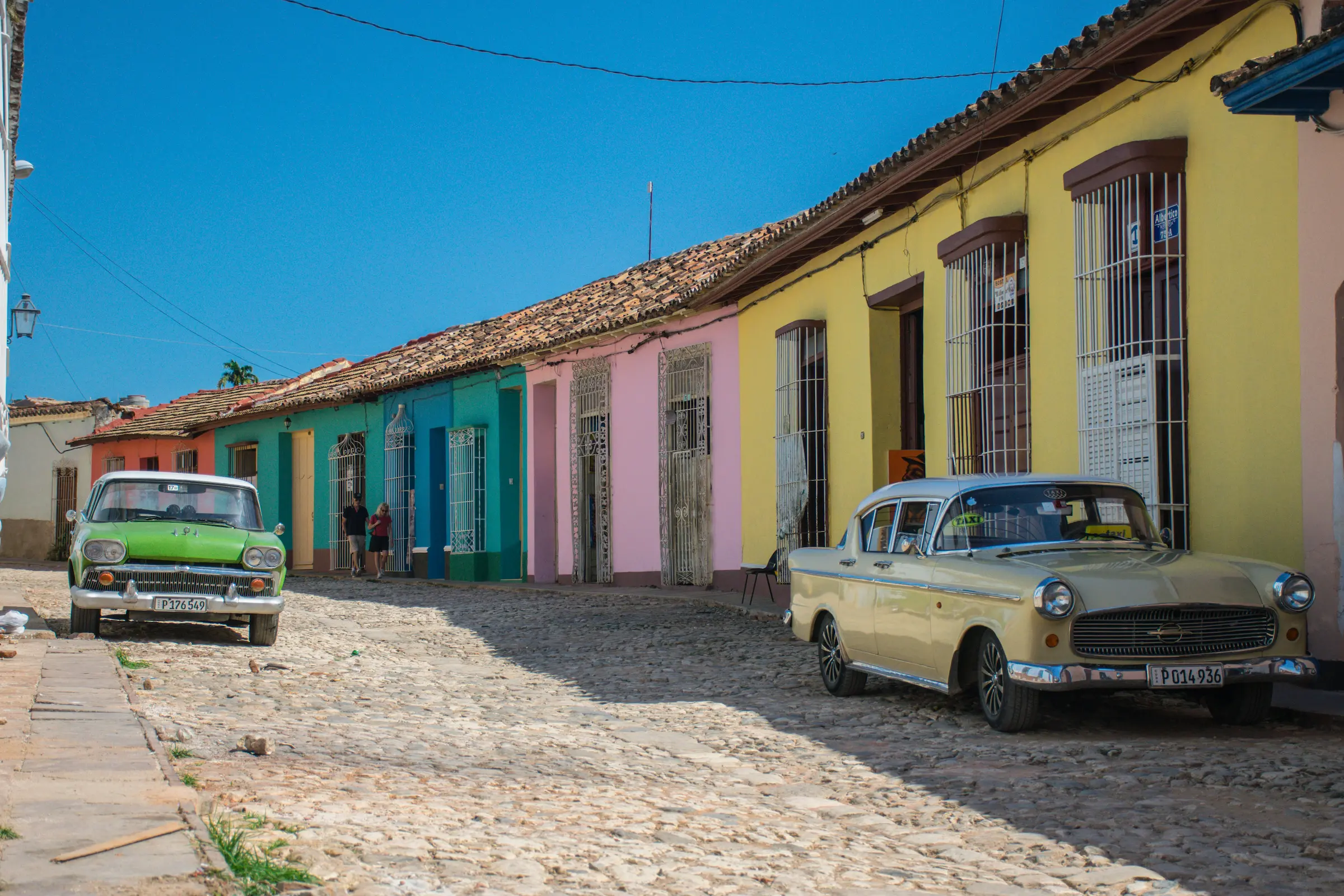
Trinidad’s cobbled center is best explored early, before the midday heat.
Cuba Travel Questions, Answered
Most visitors need a Cuban tourist card or visa, the online D’Viajeros arrival form and travel medical insurance. Rules differ by passport, so check the current Cuba entry requirements with your airline and a Cuban consulate before you fly.
Many solo travelers visit without problems, but petty theft and scams do happen, especially in busy parts of Havana. Power cuts, fuel shortages and sudden transport changes are bigger daily hassles, so read your government’s current travel advice before booking.
Multiply your daily budget by your number of days, then add about 30 percent. Bring euros or US dollars in small, clean notes, because cards often fail and ATMs can be offline.
For budget travelers, usually yes. Casas are cheaper, breakfasts are often excellent, and hosts can arrange taxis, onward rooms and local advice.
For most backpackers, Viazul buses and shared colectivo taxis. Book buses early, ask your host to arrange colectivos, and keep a spare day in case services change.
Common Traveler Mistakes
I have met travelers stuck in Havana with a card that simply would not work. Treat any card as a backup and carry enough cash for the whole trip, plus a reserve.
On Obispo Street, a smiling man told me the cigar factory was closed, but his cousin sold the same cigars for less. It is one of the oldest hustles in Havana. Smile, say no thanks and keep walking. Buy cigars from official shops only.
Cancelled buses and blackouts happen. With no spare day in your route, one delay can mean a missed flight.
Public internet is slow and patchy. Download maps, a translation app and your bookings before you fly.
Taxis and some restaurants have no fixed prices for visitors. Agree on the fare or check the menu price before you commit, and count your change.
My Verdict: Should You Travel to Cuba?
Yes, if you can live with slow internet, patchy power and plans that change. Travel to Cuba with flexible dates, enough cash and a casa host you trust. In return you get music on every corner, quiet country roads and some of the warmest hosts I have met anywhere.
If you need fast Wi-Fi, reliable transport and card payments, wait, or pick another Caribbean island for now. Check your government’s advice first, then decide. For more budget-smart guides, start at the Travel Tricks homepage.